
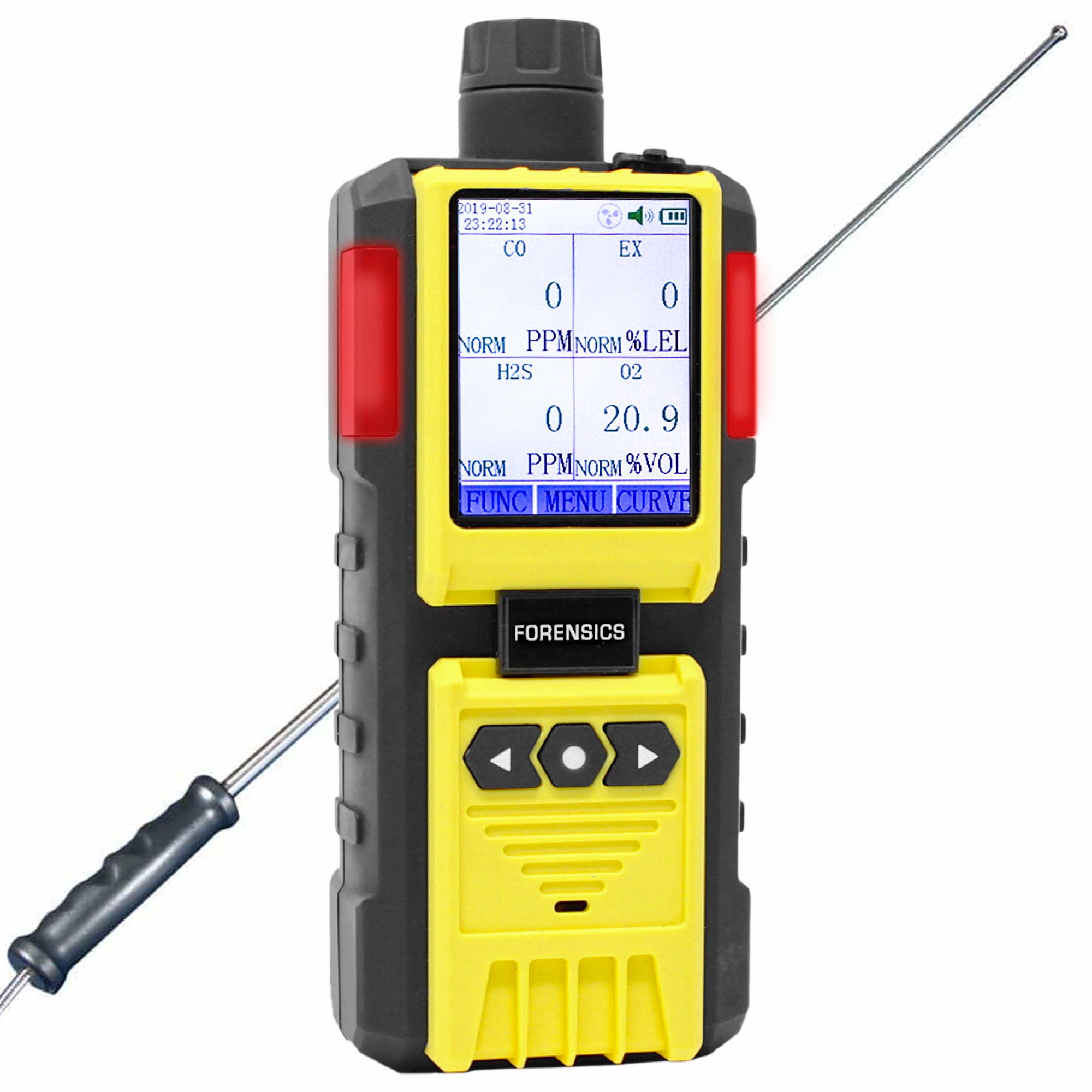
In modern industrial, environmental, and scientific applications, professional tools for accurate gas measurement and analysis are essential for ensuring safety, compliance, and operational efficiency. These advanced instruments are designed to detect, measure, and analyze gas concentrations with high precision, helping organizations monitor air quality, prevent hazards, and optimize processes.
From laboratories and research facilities to oil refineries and manufacturing plants, accurate Blausäure-Detektor measurement tools play a critical role in maintaining safe and controlled environments.
Importance of Accurate Gas Measurement and Analysis
Gas measurement is a crucial part of industrial safety and environmental monitoring. Even small variations in gas concentrations can have significant consequences, especially in confined or high-risk environments.
Professional gas measurement tools are important because they:
- Detect toxic and flammable gases at low concentrations
- Ensure compliance with environmental and safety regulations
- Prevent industrial accidents and gas leaks
- Support scientific research and experimentation
- Improve efficiency in industrial processes
Accurate data allows engineers, scientists, and safety professionals to make informed decisions and reduce operational risks.
How Professional Gas Measurement Tools Work
Professional gas analysis instruments use advanced sensing technologies and data processing systems to provide precise and reliable readings. These devices continuously sample air and analyze its chemical composition.
1. Infrared (IR) Gas Analysis
Infrared sensors detect gases by measuring how they absorb specific wavelengths of light. This method is highly effective for gases such as carbon dioxide (CO₂), methane (CH₄), and hydrocarbons.
2. Electrochemical Sensors
These sensors are widely used for detecting toxic gases like carbon monoxide (CO), hydrogen sulfide (H₂S), and nitrogen dioxide (NO₂). They provide fast and accurate readings in real time.
3. Mass Spectrometry
Mass spectrometers separate gas molecules based on their mass-to-charge ratio, offering extremely detailed gas composition analysis for research and industrial applications.
4. Laser-Based Spectroscopy
Technologies like tunable diode laser absorption spectroscopy (TDLAS) provide ultra-high sensitivity and selectivity, making them ideal for precise gas measurement in complex environments.
5. Gas Chromatography
This method is used to separate and analyze complex gas mixtures, commonly used in laboratories and chemical industries for advanced analysis.
Key Features of Professional Gas Measurement Tools
Modern gas analysis instruments are designed with advanced features to ensure accuracy, durability, and ease of use:
- High-precision gas detection at ppm and ppb levels
- Real-time monitoring and instant data output
- Multi-gas detection capability
- Automated calibration and self-diagnostics
- Digital data logging and storage systems
- Portable and fixed installation options
- Wireless connectivity and remote monitoring
- Rugged design for harsh industrial environments
These features make them suitable for both laboratory-grade analysis and field-based applications.
Applications Across Industries
Professional gas measurement tools are used in a wide range of industries where accuracy and safety are essential.
Environmental Monitoring
Used to track air pollution, greenhouse gas emissions, and atmospheric composition for environmental protection and climate studies.
Industrial Manufacturing
Help monitor emissions, control combustion processes, and improve production efficiency.
Oil and Gas Industry
Used to detect leaks, monitor pipelines, and ensure safe extraction and refining operations.
Healthcare and Medical Research
Used for respiratory gas analysis, anesthesia monitoring, and metabolic studies.
Academic and Scientific Research
Provide precise data for chemical, physical, and environmental research experiments.
Benefits of Professional Gas Measurement Tools
The use of advanced gas analysis instruments offers several important advantages:
- High Accuracy: Ensures precise measurement of gas concentrations
- Improved Safety: Detects hazardous gases early to prevent accidents
- Regulatory Compliance: Helps meet environmental and workplace standards
- Operational Efficiency: Optimizes industrial processes and reduces waste
- Data Reliability: Provides consistent and reproducible results
These benefits make gas measurement tools essential for industries that rely on accurate environmental and process data.
Integration with Modern Technology
Today’s gas measurement tools are increasingly integrated with digital and smart technologies. This includes:
- IoT-enabled monitoring systems for real-time data access
- Cloud-based platforms for centralized analysis
- AI-powered predictive analytics for hazard detection
- Automated reporting systems for compliance management
- Remote monitoring through mobile and desktop applications
This integration improves efficiency, enhances safety, and allows for better decision-making.
Future of Gas Measurement and Analysis Technology
The future of gas analysis is focused on smarter, more compact, and highly automated systems. Emerging trends include:
- AI-driven gas detection and predictive maintenance
- Miniaturized portable analyzers with enhanced sensitivity
- Advanced nano-sensor technologies for ultra-low detection limits
- Fully wireless and autonomous monitoring systems
- Enhanced multi-gas detection in a single device
These innovations will make gas measurement more efficient, accurate, and accessible across industries.
Conclusion
Professional tools for accurate gas measurement and analysis are essential for ensuring safety, efficiency, and environmental responsibility in modern industries. Their ability to deliver precise, real-time data makes them indispensable in laboratories, industrial facilities, and field operations. As technology continues to advance, these tools will become even more intelligent and reliable, supporting safer and more sustainable industrial practices worldwide.