
In today’s digital world, images carry a huge amount of information. From scanned notes to screenshots of important documents, text often lives inside image files. This is where PNG to Text technology becomes extremely useful. PNG to Text tools help convert written content inside PNG image files into editable and searchable text.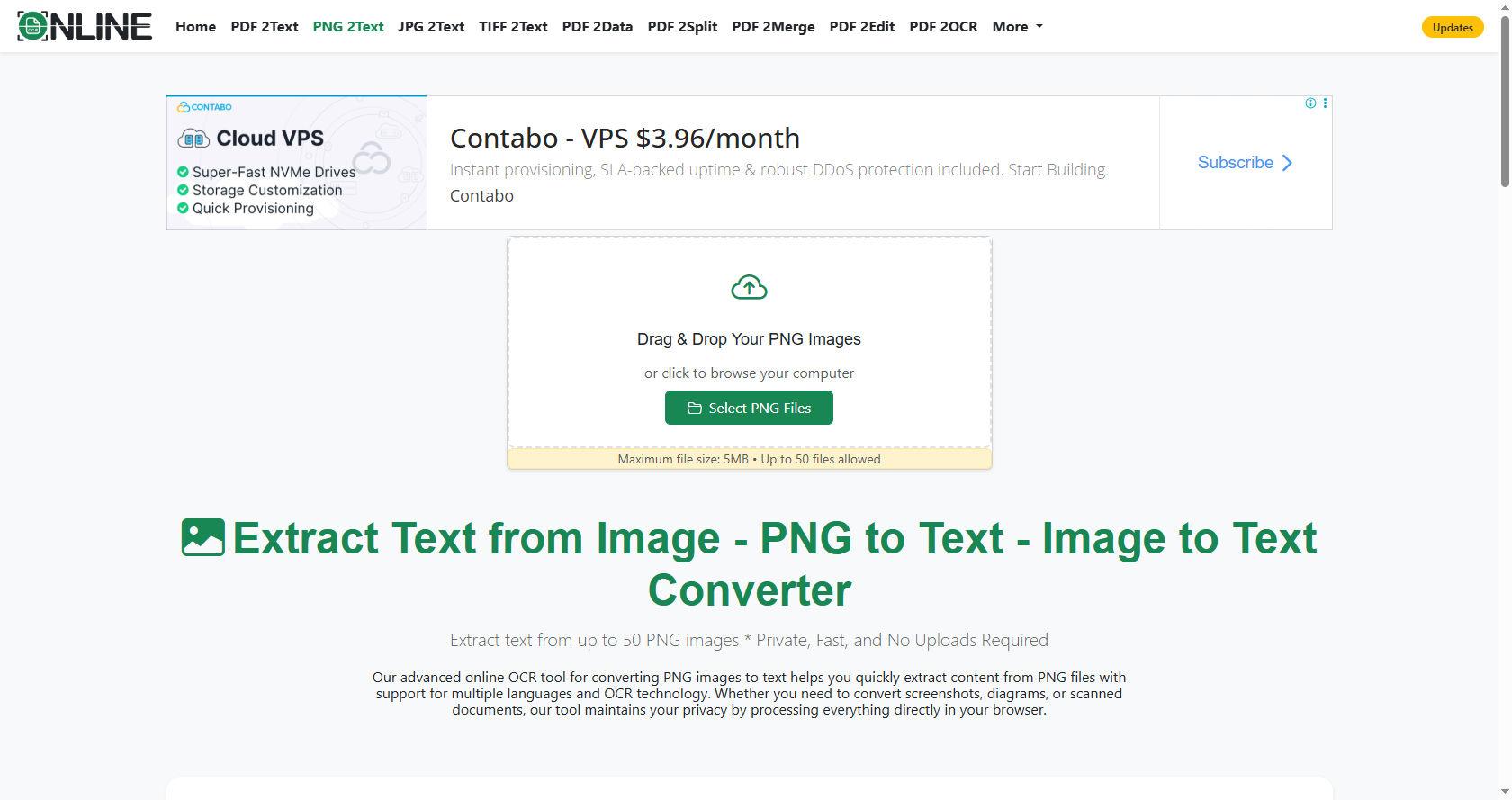
Understanding how PNG to Text works is important for students, teachers, businesses, and anyone who deals with digital documents.
Instead of manually typing everything from an image, PNG to Text systems can read and extract the content in seconds. This process saves time, reduces errors, and increases productivity.
In this comprehensive guide, you will learn what PNG to Text means, how it works step by step, the technology behind it, its benefits, challenges, and its future. Everything is explained in simple language for a 12th-grade audience.
What Is PNG to Text?
PNG is a popular image file format. It stands for Portable Network Graphics. Many screenshots, scanned documents, and digital graphics are saved as PNG files because they offer high quality and lossless compression.
The PNG to Text process refers to converting text that appears inside a PNG image into machine-readable text. Instead of seeing just pixels, a PNG to Text converter identifies letters, numbers, and symbols within the image and transforms them into editable words.
PNG to Text software uses a special technology called Optical Character Recognition, commonly known as OCR. OCR allows computers to recognize printed or sometimes handwritten characters from images. When you upload a PNG image into a PNG to Text tool, the system scans the image and extracts the text content automatically.
Why PNG to Text Is Important
PNG to Text plays a major role in digital transformation. Many important documents are shared as images rather than text files. For example, scanned certificates, receipts, notes, and old printed books may be saved as PNG images.
PNG to Text solutions make it possible to:
-
Edit text from scanned documents
-
Search for keywords inside image files
-
Copy and paste content from images
-
Translate text from images
-
Store data in digital databases
Without PNG to Text, users would need to manually retype everything. This would take time and increase the chance of mistakes. PNG to Text can complete the same task in seconds with high accuracy.
PNG to Text platforms are especially helpful in education, offices, research, and government work, where document processing is common.
Step-by-Step Process: How PNG to Text Works
To understand how PNG to Text works, let’s break it down into simple steps.
1. Image Input and Scanning
The first step in any PNG to Text reader is image input. The user uploads a PNG file into the system. The PNG to Text begins by scanning the entire image.
The software analyzes the image pixel by pixel. Since computers see images as grids of tiny dots called pixels, the system must examine the arrangement of light and dark areas to identify text regions.
2. Image Preprocessing
Before recognizing characters, the PNG to Text system cleans and prepares the image. This stage is called preprocessing.
During preprocessing, PNG to Text improves image quality by:
-
Removing noise or random dots
-
Adjusting brightness and contrast
-
Converting color images to black and white
-
Straightening tilted text
-
Sharpening blurry letters
These adjustments make it easier for the software to detect characters accurately.
3. Text Detection
Next, PNG to Text uses text detection methods to identify where text is located in the image. Not all parts of a PNG file contain text. Some parts may include graphics, lines, or backgrounds.
The PNG to Text engine separates text areas from non-text areas. It divides the image into sections and focuses only on the areas that contain letters and numbers.
4. Character Recognition (OCR)
This is the most important step. PNG to Text matches detected shapes to known characters using Optical Character Recognition.
The system compares each shape in the image with stored patterns of letters and symbols. For example, if the shape looks like the letter “A,” the software identifies it as “A.”
Modern PNG to Text systems use advanced machine learning algorithms. These algorithms allow the software to learn from millions of examples of text. As a result, accuracy improves over time.
5. Word Formation and Output
After recognizing individual characters, PNG to Text checks spacing and alignment to form words and sentences.
The PNG to Text output is then generated as editable text. The user can copy, download, or edit this text in formats such as TXT, Word, or PDF.
Technologies Behind PNG to Text
PNG to Text relies on several advanced technologies working together.
Optical Character Recognition (OCR)
OCR is the core technology behind PNG to Text tools. It converts images of text into actual characters that a computer can process.
Traditional OCR systems used pattern matching. Modern systems use artificial intelligence to improve accuracy.
Artificial Intelligence and Machine Learning
PNG to Text tools today are powered by AI and machine learning. These systems are trained using large datasets containing different fonts, languages, and handwriting styles.
Because PNG to Text accuracy depends on learning patterns, machine learning allows the software to recognize complex fonts and even partially damaged text.
Over time, PNG to Text becomes smarter as it processes more images.
Natural Language Processing (NLP)
Some advanced PNG to Text applications also use Natural Language Processing. NLP helps the system understand grammar and context.
For example, if a recognized word does not make sense in a sentence, the software can correct it automatically using language rules.
Benefits of Using PNG to Text
PNG to Text saves time and effort. Instead of typing long paragraphs from an image, users can extract content instantly.
PNG to Text helps students convert handwritten notes into digital text. This makes studying and editing easier.
PNG to Text improves accessibility. Visually impaired users can use screen readers to listen to extracted text.
PNG to Text makes document management more efficient. Businesses can store searchable text instead of static images.
Here are some key advantages:
-
Faster data entry
-
Reduced manual errors
-
Easy content editing
-
Improved document organization
-
Better search functionality
Real-World Applications of PNG to Text
PNG to Text is used in many industries and everyday tasks.
Education
PNG to Text allows students to convert textbook pages or handwritten notes into editable digital files. Teachers can scan worksheets and reuse content easily.
Business and Finance
PNG to Text converts invoices, receipts, and contracts into digital text. Companies can store this information in databases and analyze it quickly.
Healthcare
PNG to Text supports hospitals in digitizing patient records. Scanned medical reports can be converted into searchable data.
Legal Sector
PNG to Text assists lawyers in converting scanned legal documents into editable files. This makes searching case details faster.
Personal Use
PNG to Text turns screenshots of articles, messages, or forms into text that can be copied and shared.
Challenges in PNG to Text Conversion
Although PNG to Text is powerful, it is not perfect.
PNG to Text may struggle with low-quality images. If the image is blurry or poorly lit, accuracy decreases.
PNG to Text struggles with unusual fonts or decorative text styles. Handwriting can also be difficult to recognize.
PNG to Text accuracy depends on image resolution. Low-resolution PNG files may produce errors.
Other challenges include:
-
Skewed or rotated images
-
Complex backgrounds
-
Multiple languages in one image
-
Overlapping text and graphics
However, improvements in AI are reducing these issues every year.
How to Improve PNG to Text Accuracy
To get better PNG to Text results, users should:
-
Use high-resolution images
-
Ensure good lighting when scanning
-
Avoid shadows on the document
-
Keep text straight and aligned
-
Use clear fonts
Improving image quality directly improves PNG to Text performance.
Some advanced tools also allow users to select language settings, which increases accuracy for specific languages.
Security and Privacy Considerations
Many PNG to Text tools are available online. While convenient, users should consider data security.
PNG to Text tools that operate online may upload files to cloud servers. If the image contains sensitive information, users should ensure the platform is secure.
For confidential documents, offline PNG to Text software may be a safer option.
Always check privacy policies before uploading important files.
Choosing the Right PNG to Text Tool
There are many PNG to Text software options available. Some are free, while others require payment.
When selecting a tool, consider:
-
Accuracy rate
-
Language support
-
Speed of conversion
-
File format options
-
Security features
-
User-friendly interface
The best PNG to Text tool depends on your needs. Students may prefer simple free tools, while businesses may require advanced features and batch processing.
The Future of PNG to Text Technology
Technology continues to evolve rapidly. PNG to Text will become even more accurate and intelligent in the future.
With improvements in artificial intelligence, PNG to Text continues to recognize handwriting more effectively.
Future systems may include real-time text extraction from live camera feeds. Mobile devices already use similar features for instant translation and scanning.
As computing power increases, PNG to Text will likely support more languages and complex scripts with near-perfect accuracy.
Common Myths About PNG to Text
Some people believe that PNG to Text is always 100% accurate. In reality, accuracy depends on image quality and software capability.
Another myth is that PNG to Text can only recognize printed text. Modern tools can also recognize some types of handwriting.
Some users think PNG to Text is complicated. In truth, most tools require only uploading a file and clicking a button.
Comparing PNG to Text With Manual Typing
Manual typing takes time and effort. It also increases the risk of spelling errors.
PNG to Text automates the process and reduces human mistakes.
While manual typing may still be necessary for unclear handwriting, PNG to Text is usually much faster and more efficient.
Step-by-Step Example of PNG to Text in Action
Let’s imagine you have a scanned PNG image of a printed article.
-
Upload the PNG file to a PNG to Text tool.
-
The software scans and preprocesses the image.
-
Text areas are detected.
-
OCR recognizes characters.
-
Words and sentences are formed.
-
The final editable text appears on your screen.
Within seconds, you can copy, edit, or save the extracted content.
Limitations to Keep in Mind
Although powerful, PNG to Text cannot fully understand images with heavy artistic designs.
It also may not correctly interpret symbols or mathematical equations unless designed specifically for that purpose.
Still, ongoing research and development are improving these capabilities.
Conclusion
PNG images are widely used for storing visual information. However, text trapped inside an image cannot be searched or edited easily. This is where PNG to Text technology becomes essential.
Throughout this guide, we explored how PNG to Text works step by step. From image scanning and preprocessing to OCR recognition and final output, each stage plays a crucial role. We also discussed the technologies behind it, including artificial intelligence and natural language processing.
PNG to Text offers major benefits such as time savings, improved accessibility, better document management, and higher productivity. It is widely used in education, healthcare, legal services, businesses, and personal tasks.
At the same time, challenges like low image quality and unusual fonts can affect results. By using clear images and reliable tools, users can improve accuracy significantly.
Looking ahead, the future of text recognition technology is bright. With continuous advancements in AI, PNG to Text will become faster, smarter, and more accurate. It will play an even greater role in digital communication and document processing.
In simple terms, PNG to Text transforms static images into usable, editable knowledge. It bridges the gap between visual data and digital text, making information more accessible to everyone.
As digital content continues to grow, understanding how this technology works will help you stay ahead in school, work, and everyday life.
